About the GRID and DIAs
This document is a supporting document for the project. It provides information for project participants, reviewers and viewers. It is not part of the formal project deliverables.
1. Introduction
Approved as a project by UN/CEFACT in April 2025, The Global Trust Registry Project (“GTR project”) has captured and specified the requirements, governance and technical foundation for a digital directory, publicly accessible and hosted by the United Nations, that will list authoritative registrars of participating UN Member States and the registers that they maintain. The purpose of the UN Global Registry Information Directory (GRID) is to facilitate digital trust, verification, and interoperability in the global supply chain and public administration systems.
The GRID will enable organisations to verify whether a trade relevant credential (e.g., a commercial registration number, a property title, a trademark ownership certificate) has been issued by a valid and recognized authoritative registrar. It will also mitigate risks of impersonation, forgery, or unverifiable claims that exploit fragmented and opaque systems.
To facilitate verification and to support different levels of registrar digital maturity, the GRID will also record if Registrars issue digital credentials or otherwise enable online verification of their register contents and the holders of their identifiers.
There are trillions of dollars of value that can be unlocked by GRID, DIAs and UNTP as a whole. The diagram below gives an overview of the potential benefits for global trade.
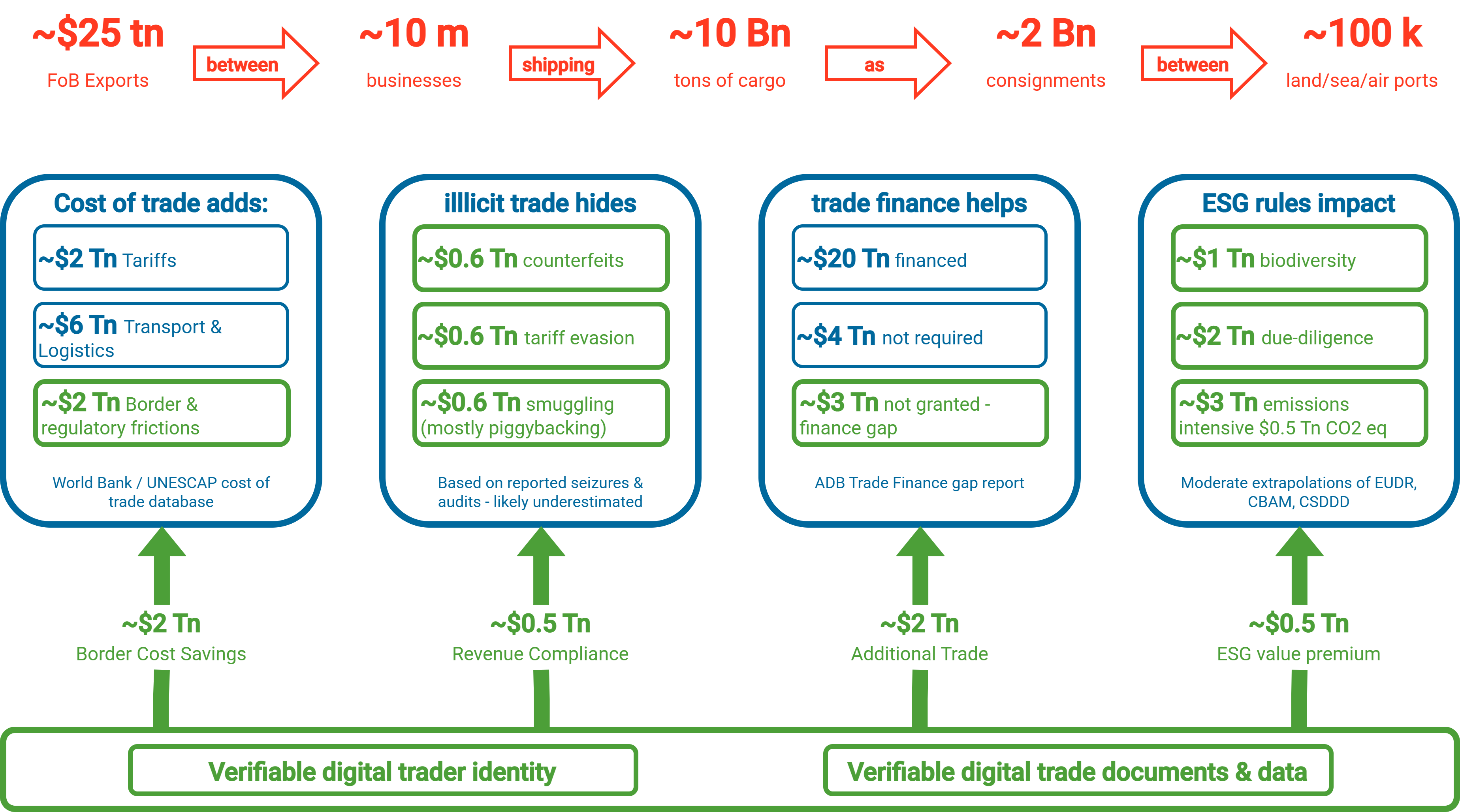
The Scale of Global Trade and benefits of Transparency
A video explainer of these opportunities and the 'WHY' of the GRID can be found here:
GRID Video Explainer
The documentation on this site has two key objectives:
-
Recommend the GRID. Explain the why, what and how of a Global Registry Information Directory (GRID). Why we need one. What it will (and won't) do. How it can be run as a self-sustaining initiative.
-
Recommend Digital Identity Anchors. Explore and describe how Registrars can use the UNTP "Digital Identity Anchor" (DIA) specification1 to issue verifiable credentials using their existing identifiers, and how these can further support global supply chain transparency and verification. The proposed use of the DIA by registrars also feeds guidelines on the use of the DIA specification, and proposed enhancements to the DIA specification.
In summary: the GRID provides a trustworthy directory of participating UN Member State registrars; and DIAs provide verifiable proof of their registrations.
2. Design Principles
The approach adopted follows a number key principles. These were agreed within the project team and presented at the UN/CEFACT Plenary in Geneva in 2025. A simplified version is presented below. Note that item 10 is an additional element to the Geneva presentation and has been added for clarity.
-
WILL seek to recognise authoritative registries of participating UN Member states
-
WILL propose a governance framework for a UN CEFACT registry participation process
-
WILL define a data model and verification process for existing registry identifiers
-
WILL support implementation pilots and guidance
-
WILL support key SDGs: Including 9, 12, and 16
-
WILL NOT seek to create [yet another] central registry of all things
-
WILL NOT issue secondary credentials nor issue credentials on behalf of registries
-
WILL NOT disrupt existing business models of nation state registries
-
WILL NOT dictate to nation states what they do, nor how they should do it
-
WILL NOT define yet another standard for identifier(s) to be issued by Registrars
3. The GRID Objective
Achieving the GRID will demand defining a framework for identifying, listing, and verifying authoritative public legal registers that issue or certify identifiers related to rights, ownership, legal personality, or public status under national or international law. With a focus on supply chains and trade, these may include: commercial and corporate registers, land and real estate property registers, registries of movable assets and secured transactions, intellectual property and trademark registries, etc.
The framework needs to confirm institutional legitimacy, legal reliability, and operational integrity of listed registrars and the registers they maintain. This needs to be aligned with internationally recognized principles of registration and legal publicity. Identifying minimum requirements for legal authority, governance, and verifiability will promote legal certainty and cross-border digital trust.
Further, and in order for the GRID to remain relevant and useful, it needs to be fit for purpose and economically sustainable. Global economic contraints demand that the GRID be self-sustaining. This is a reasonable expectation: if the GRID delivers more value to participants than the cost of participating, it should be welcomed. The ICAO PKD system2 is a blueprint and inspiration for this approach. Two key principles of the GRID model are that Registrars should be empowered (and incentivised) to maintain their own data in the GRID, and that the GRID itself should be as lightweight and efficient as possible to operate.
3.1 GRID Architecture
There are a number of architectural options available for the GRID to provide its services. In broad terms these range from centralised architectures (where the GRID is the focal point for proof of recognition of a Registrar, and at the logical extreme, involved in every trade verification) to decentralised architectures (where the GRID issues recognition to Registrars such that proof of GRID recognition can be locally verified).
Strictly centralised architectures (and federated models) demand 24/7 availability. Further, world trade volumes would mean extremely high transactions rates if the GRID is queried for every trade transaction. However, we want the GRID to be a powerful addition to world trade, not a bottleneck. Hence we have proposed a model that adopts a loosely coupled approach: harvesting of Registry data by the GRID together with Registry membership verification centrally (by checking the GRID entries and/or downloading a copy of the GRID table), and locally (by the GRID issuing a GRID membership DIA to participants).
Further, the design is such that the GRID is not expected to be queried for every transaction. Exchanges between trade participants that know each other well do not need to query the GRID. Registrar verification is sufficient if the Registrar is already known (has previously been verified) to be the authoritative registrar for the UN Member State in question. The GRID membership status becomes important when new trade partnerships are formed and when changes to existing partnerships occur. GRID status is important when a supply chain transparency graph is traversed and the explorer enters territories that they do not know well (see the UNTP specification for discussions on transparency graphs).
The diagram below gives a logical architecture of how the GRID interacts with participant registries.
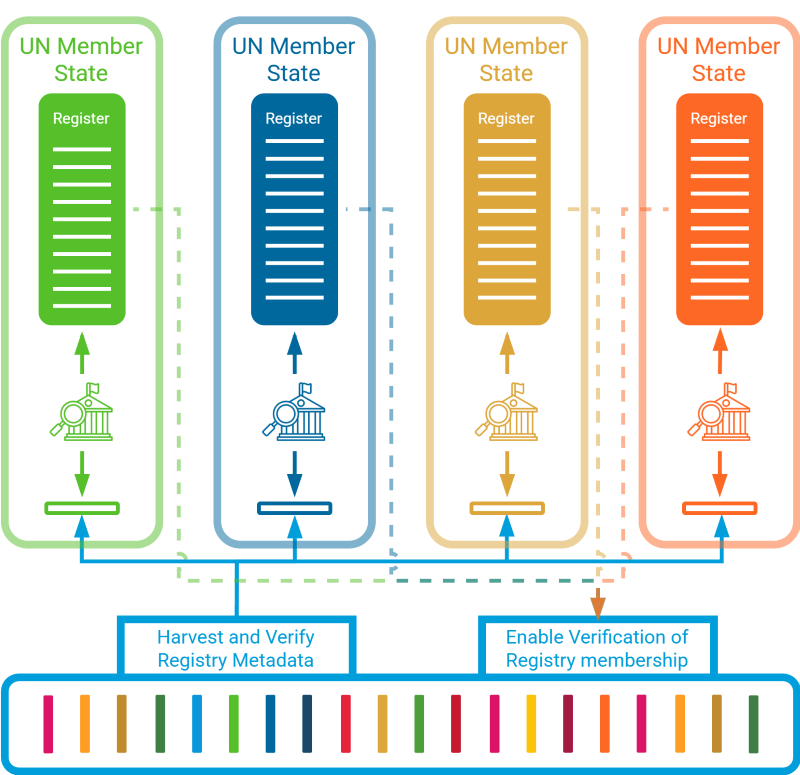
Logical model of the Global Registry Information Directory
Participating registrars retain full control and responsibility for the currency and accuracy of data harvested by the GRID. Register content remains under the full authority and control of the registrar and is not included in the GRID. The GRID is only a directory of participating Registrars and their Registers, it does not copy the content of registers.
The following section describes how we arrived at this representation and a logical model for the GRID.
3.2 Building a Logical Model for the GRID
The following is a step-by-step explanation of how the logical model was built.
Step 1
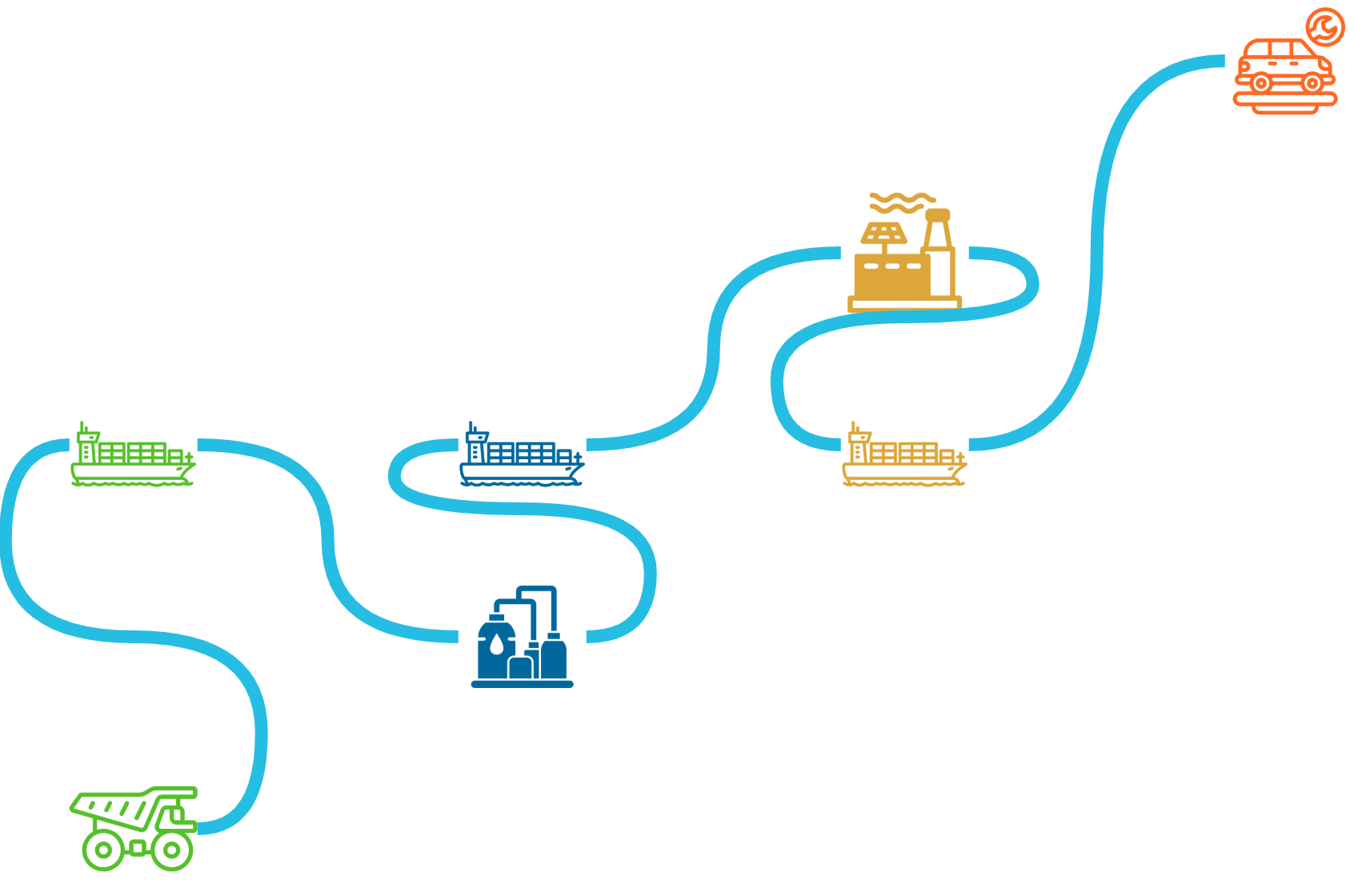
This is a very simple representation of an instance of a supply chain path with a number of participants producing and shipping goods (products).
Each participant is either a supplier or a buyer, or both.
Note that the ship icon could also be a plane, train, truck etc.
Step 2
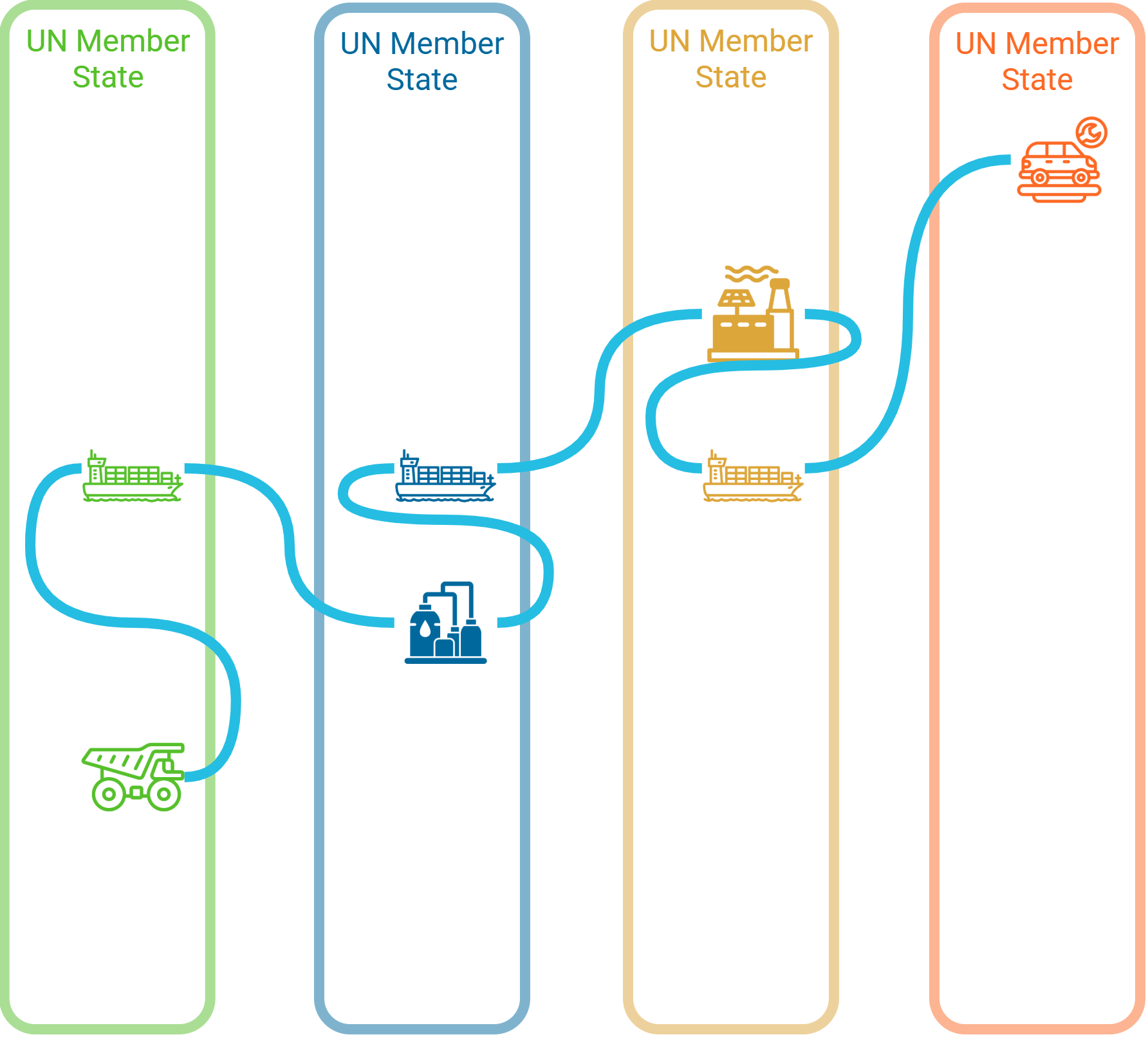
In legal world trade, supply chain interactions occur between participants registered in UN Member States.
Each participant in a legal trade interaction is registered in a UN Member State.
Step 3
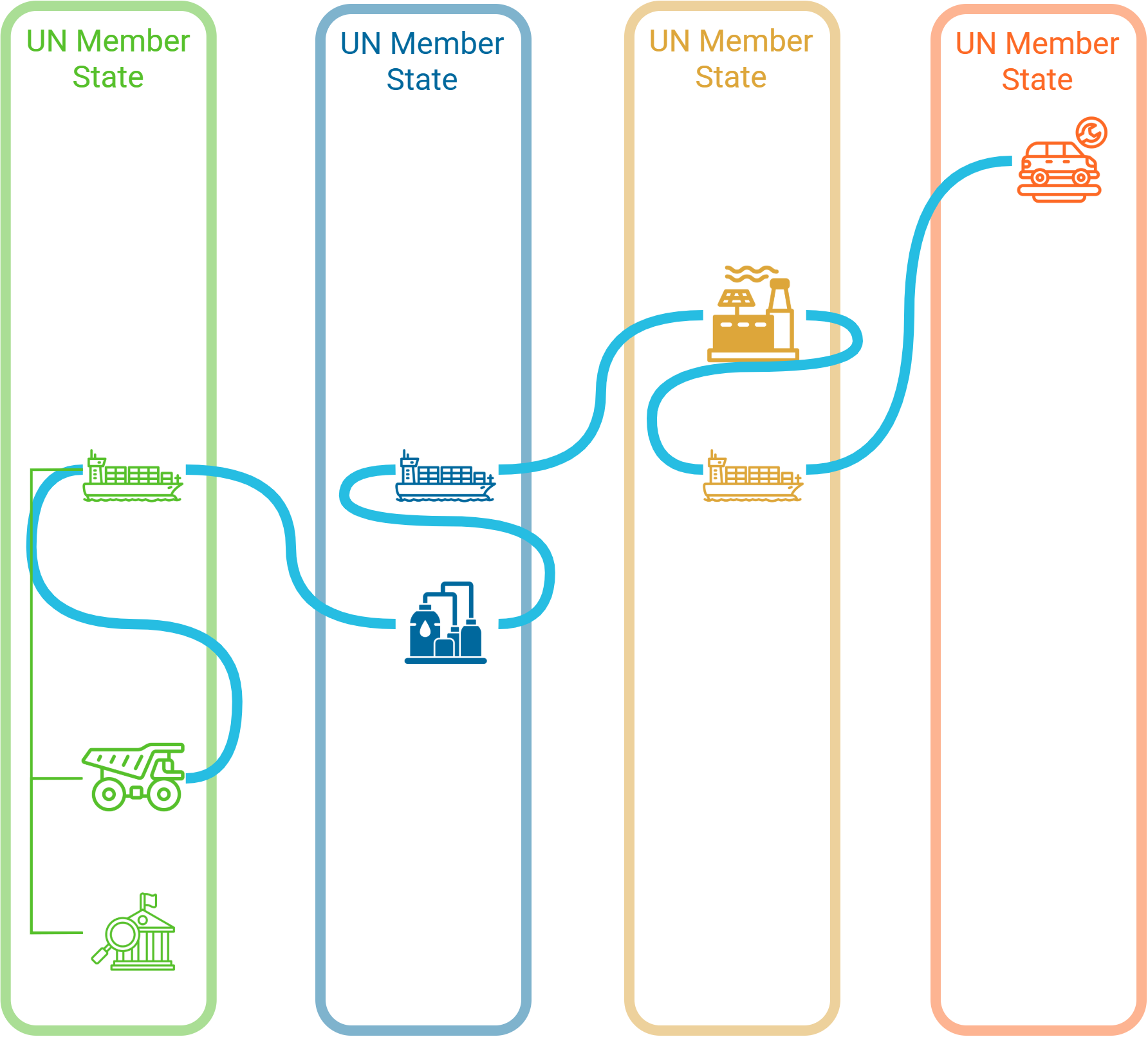
Legal registration is with "Authoritative Registrars" - organizations who are recognized as having responsibility and authority by the legal framework of their UN Member State.
See Glossary, Implementation Guidelines, and Governance and Target Operating Model documents for details of how "authoritative" is understood in the GRID context.
Step 4
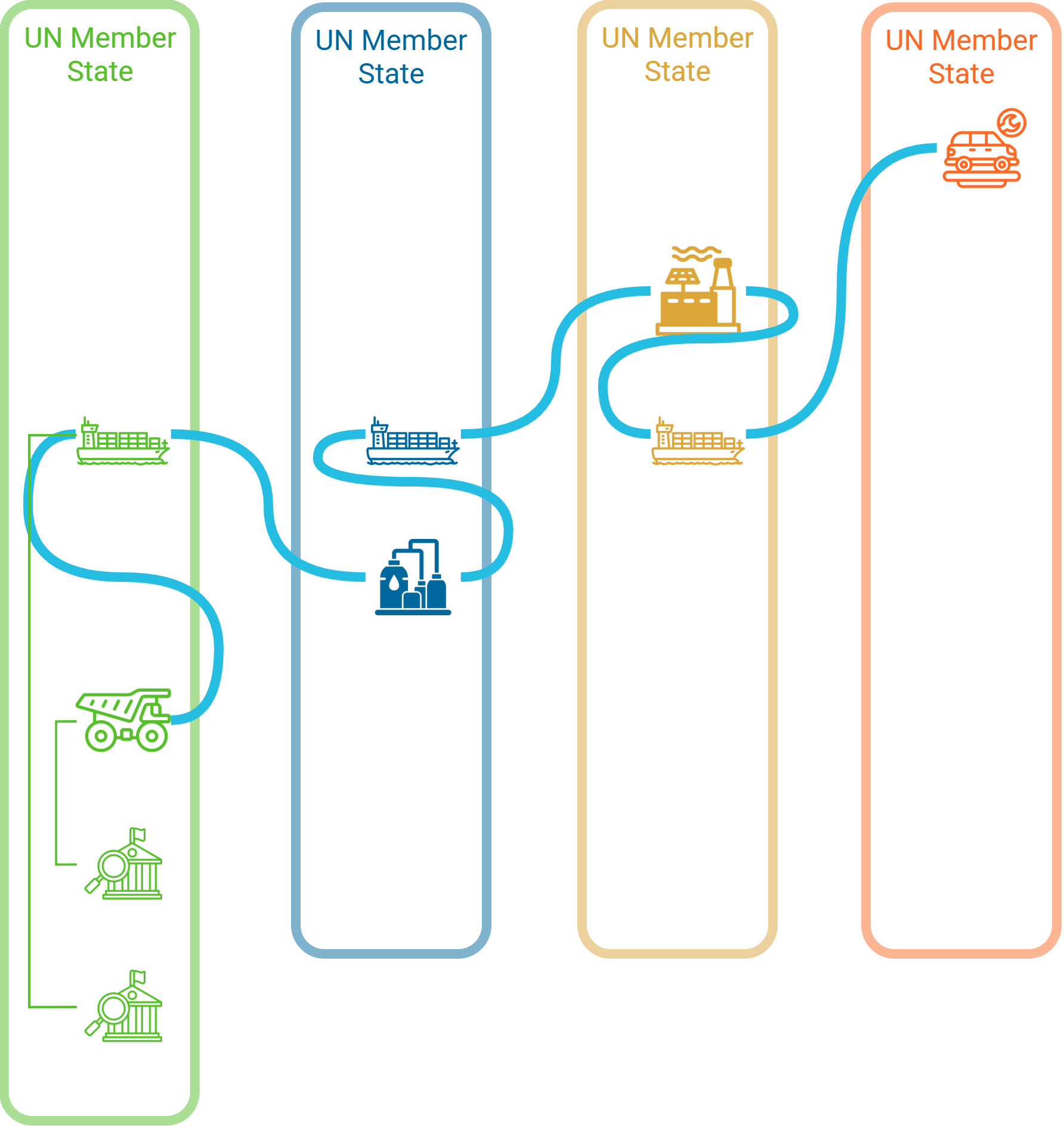
There are often different Registrars for each thing to be registered (land, facilities, organizations, trademarks, etc.), and sometimes there are federated systems of Registrars within one nation state.
Multiple registars and registers can be accommodated.
The logical model diagram shows a single registrar in each UN Member State for simplicity.
Step 5
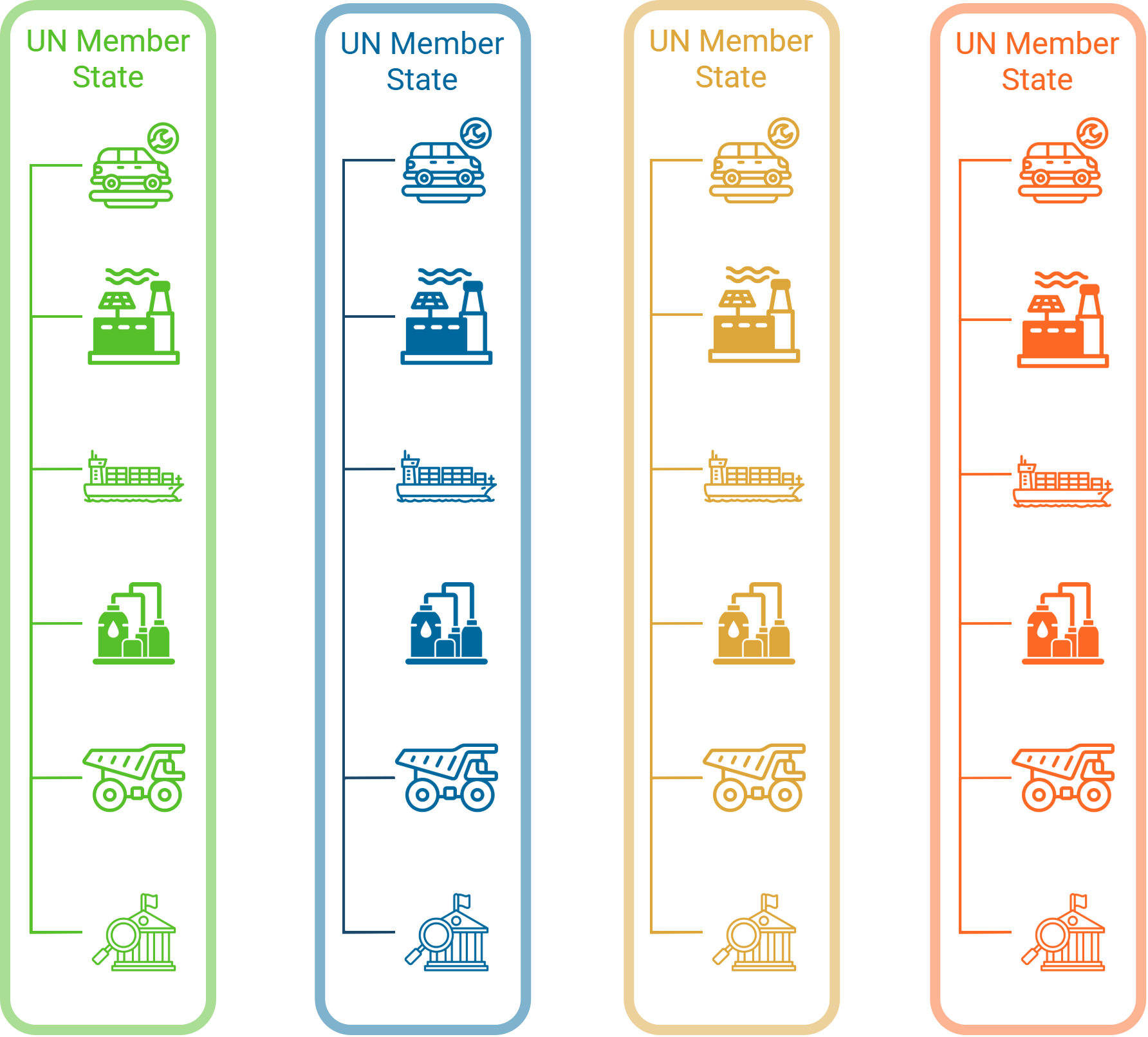
Again for simplicity, the diagram uses the same pattern of supply chain participants for each UN Member State.
This is a gross simplification of course.
Step 6
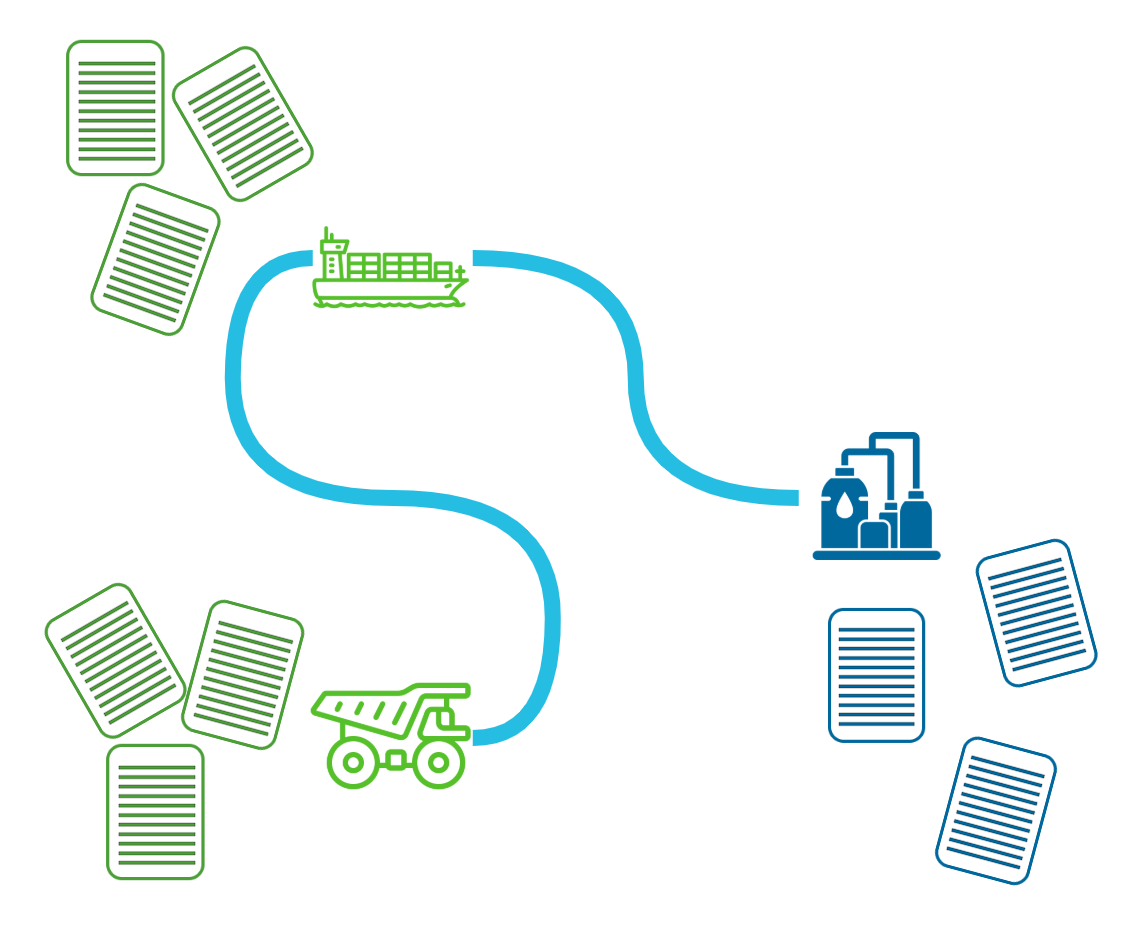
Each trade interaction involves product (goods), documentation and value exchange.
The documentation will include shipment and commercial details, such as : Bill of lading, Commercial Invoice, Packing List, Certificate of Origin, Shipper's Letter of Instruction etc.
Most of the documentation exchanged in trade interactions is still paper-based, either physical documents or PDF (electronic representation of physical document)
"Who" and "What" are key points to confirm in every trade interaction.
The documentation includes claims (assertions) about who the Supplier is and details of the product being shipped. Such as:
- Name of company and registration details ("Digital Identity Anchor")
- Product description and attributes ("Digital Product Passport")
- Claims about quality and processes (conformance, quality, licenses etc.) - "Digital Conformance Credential"
These are examples of the core verifiable credentials records of the United Nations Transparency Protocol (UNTP).
Step 7
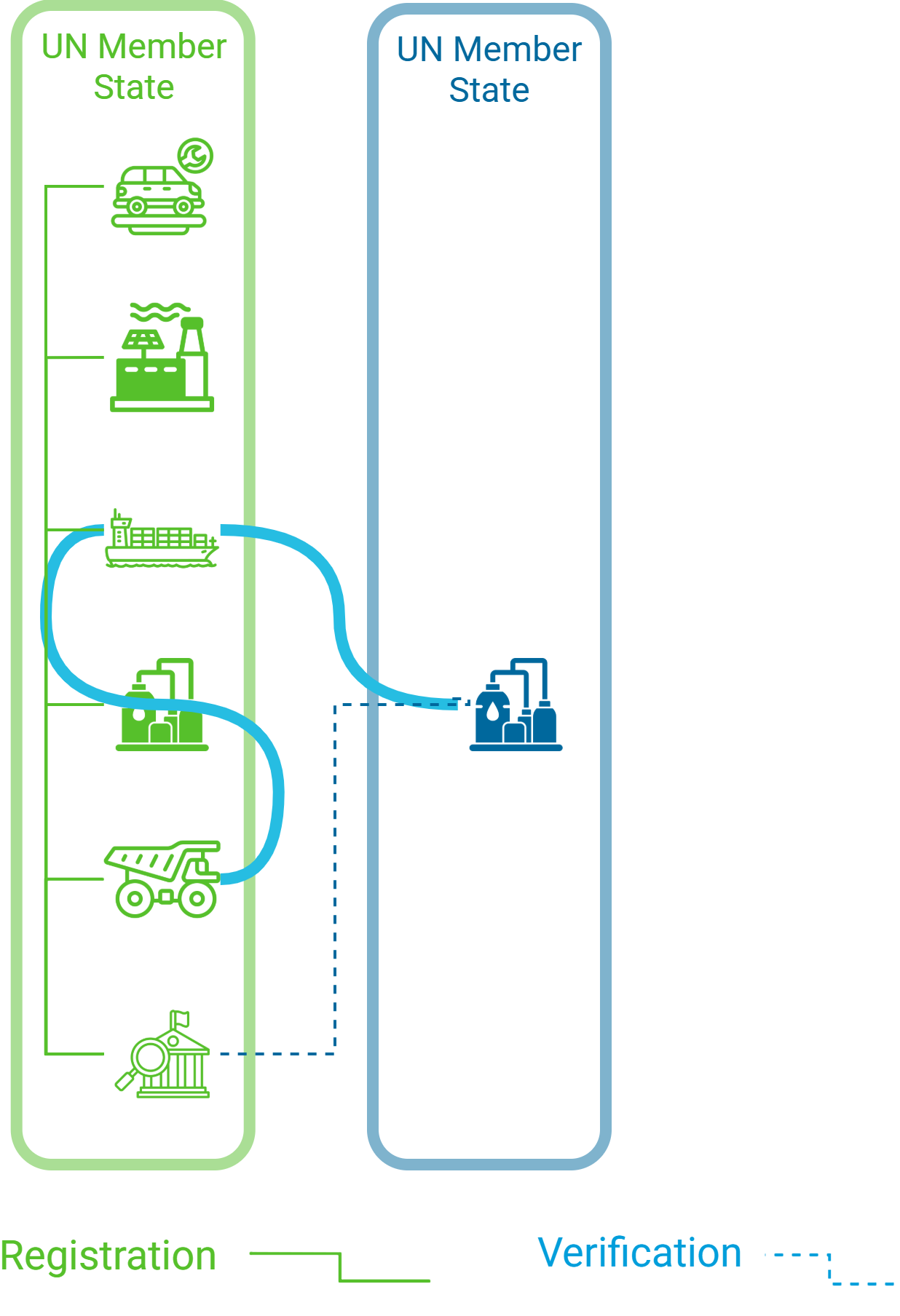
Documentation needs to be checked and verified. Recipients (buyers and other relying parties) will check to see that the shipment meets regulatory requirements and their commercial expectations.
It's not just the supply chain participants that are keen to check things, regulators, border control and tax authorities etc. are also interested. One document can have many organisations interested in its contents.
These time and effort in making these checks creates delays and increases costs in world trade. Estimates of the cost of this "verification tax" range from 10% - 45% of total trade value.
Step 8
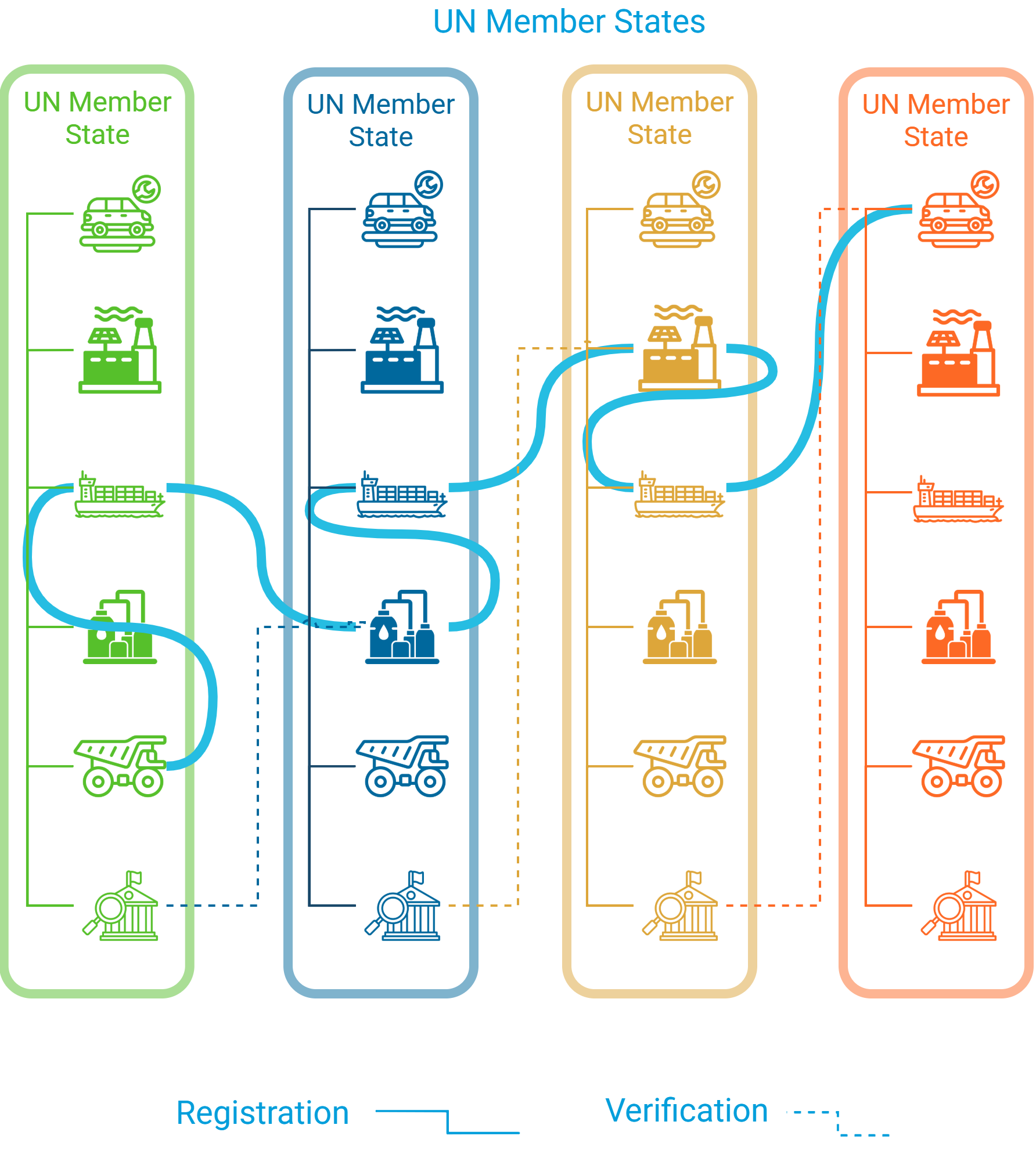
This is then our simple model of a supply chain.
With these pieces in place, we can now show our supply chain participants checking the registration and claim details of their supplier with the authoritative registrar for their supplier in their supplier's jurisdiction.
Step 9
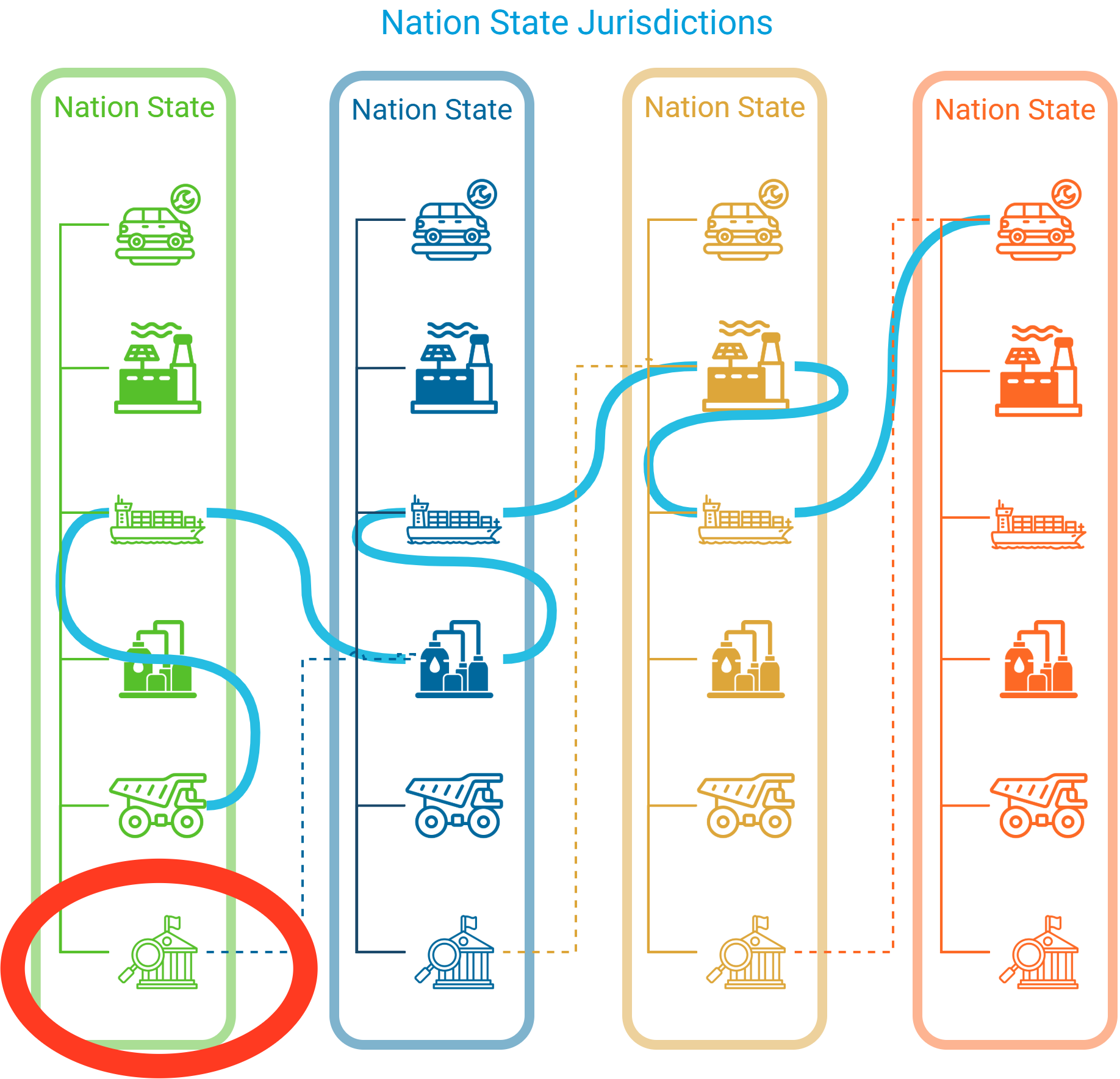
But who says these Registrars are Authoritative?
Trillions of dollars of value are exchanged in supply chains. This makes them the target of significant criminal activity. From counterfeit products to false claims and elaborate (but fake) provenance.
Who says that this is the authoritative Registrar for a UN Member State? What trustworthy source can I use to find out?
Step 10
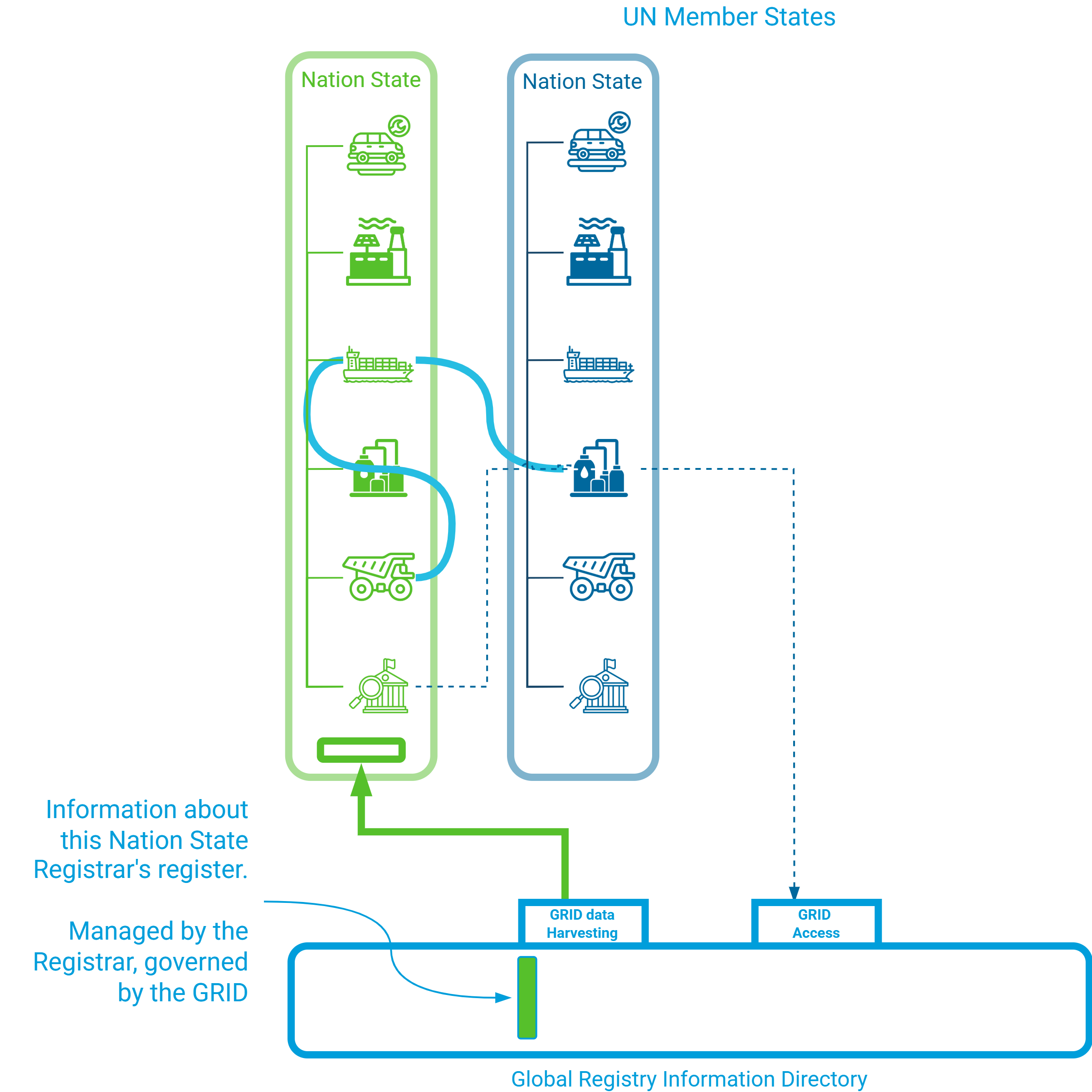
That's why we need the GRID!
The GRID will confirm who is the registrar for supply chain registrations in each participating UN Member State.
Curated and governed by the UN, with data self-maintained by the UN Member State Registrars, the GRID provides and efficient and cryptographically trustworthy source of truth.
Step 11
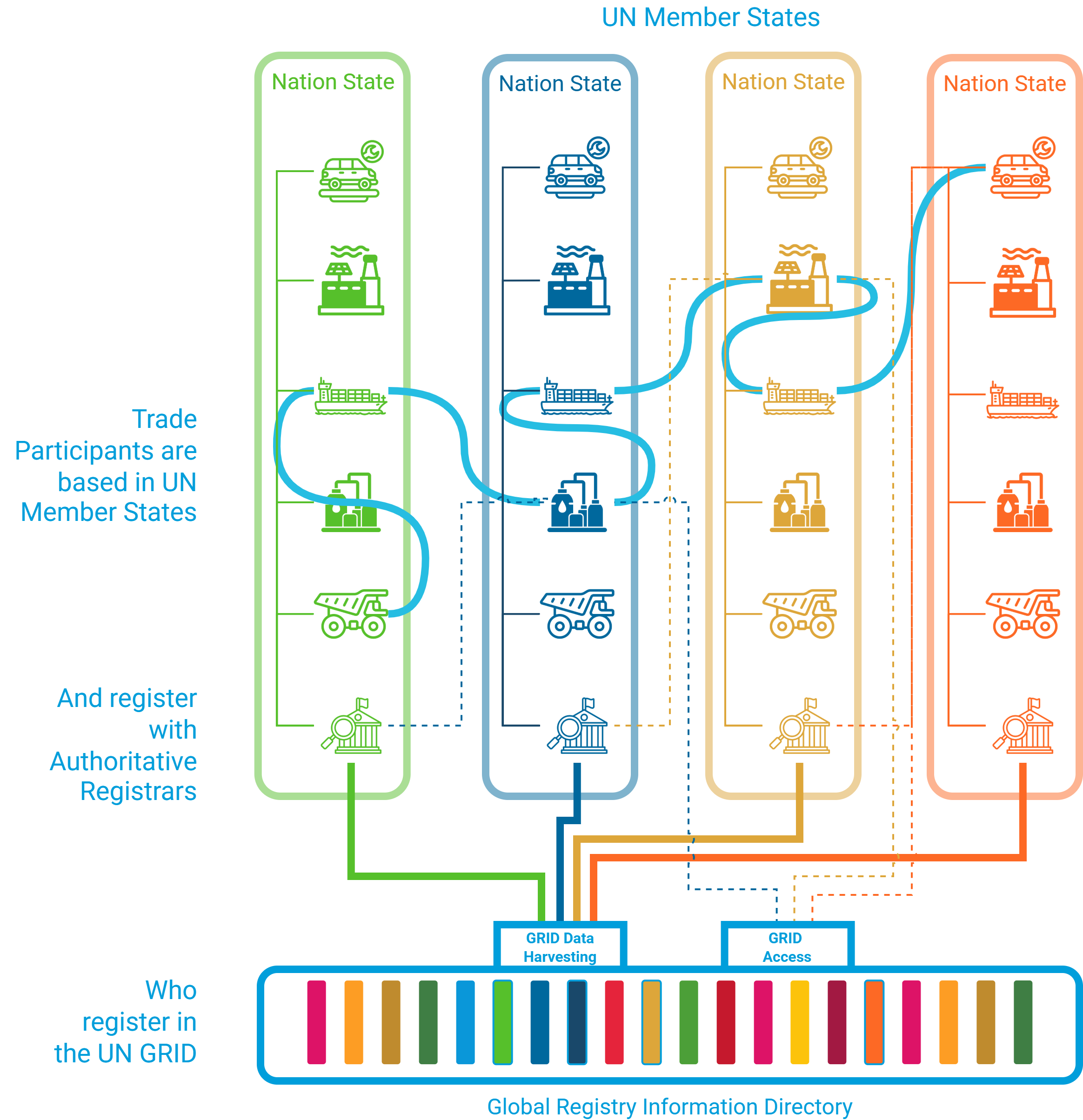
So now we have all the previous elements in the one schematic.
Note that this is a logical model - a proposed physical implementation of the GRID is described in the pilot design documents.
In summary, the GRID periodically harvests (reads) a small amount of data about each participating register from participating UN Member State registrars. This data is in a defined and cryptographically signed format (see Participating Registrar Data Schema) and is managed and maintained by the Registrar for the register. The register contents themselves remain with the Registrar.
4. DIA Objective
The second project objective is to provide recommendations on the data schema, and issuance and validation processes of the UNTP Digital Identity Anchor (DIA) 2. For most Registrars, issuing a DIA will be an "and" to their existing products and services. Paper and other forms of physical credentials will need to be supported for some time to come, and some Registrars may already be providing forms of digital presentation and/or produce other digital products from their registers.
For Registrars, issuing a DIA offers builds on their existing value proposition and adds significant benefits:
-
The DIA is a light-weight, open-standards based, cryptogaphically protected "trust wrapper" around their existing identifier structures. It is not a new identifier.
-
Issuing a DIA provides a foundational UNTP credential to the Registrar's members for interaction in the global supply chain ecosystem.
The DIA is a verifiable credential defined in the UNTP protocol specification. The GTR project reviewed the existing data schema (at version 0.6) and considered the use of the DIA by authoritative sources (Registrars). It is important to note that the DIA is not a new identifier, it enables Registrars to make use of the identifier(s) they already issue. The Registrar uses the DIA structure and apprapch to create a verifiable credential that they can issue to the register applicant together with the applicant's supplied decentralised identifiers (DID(s)) 3.
The benefit of using the DIA together with GRID registration is to significantly enhance interoperability, transparency and trust in participating UN Member States to the benefit of global trade and productivity. Each GRID participant uses their existing processes and identifier definitions within DIA verifiable credentials. This provides a cryptographically based foundation for global digital public infrastructure, services and international business.
The legal meaning and proposed data structure for the DIA is presented in the project documentation here.
5. Joining the GRID, Issuing a DIA and Use Patterns
The proposed Governance and Target Operating Model for the GRID is provided in the project document GRID Legal Governance and Target Operating Model - what follows in this section is a brief (non-normative) explanation of the proposed approach.
The sequence diagrams below shows three distinct interactions:
- Joining the GRID: A registrar applying to be a member of the GRID
- Issuing a DIA: A supply chain participant (supplier in the example below) registering with a Registrar and applying for a DIA
- Enabling Trustworthy Digital Trade: A suppler shipping goods and documentation to a buyer who verifies the goods and documentation before receipt and payment approval
Each of these is presented as a sequence diagram below.
5.1 Join GRID
Explanatory notes:
-
Joining the GRID is a voluntary decision by a UN Member State and their Registrar(s). Applicants must meet the eligibility requirements described in the GRID Legal Governance and Target Operating Model and Implementation Guidelines.
-
While the final pricing model is to be determined, the aim is that GRID participation should be on a par with ICAO PKD participation. An indication of the target cost of participation for a UN Member State is US$20k per year.
Please see the project documentation for further details.
5.2 Issue DIAs
Explanatory notes:
-
Issuing DIAs is encouraged but not mandatory to be a member of the GRID. It is recognised that UN Member State Registrars will be at different levels of digital maturity and will have existing investments, budgets and development roadmaps. It is also possible that Registrars have already invested in other forms of digital verifiable identifiers. For example, within Europe there is significant investment in organisation identifiers and business wallets. GRID membership adds global leverage to these existing investments.
-
DIAs are designed to be lightweight, low cost, high value additions to existing approaches, whether these are analogue (paper/PDF/websites etc.) or verifiable digital approaches. There will be a need to support existing processes, hence DIAs will be an and to the way Registrars work currently.h
5.3 Empower trustworthy digital trade
Explanatory Notes:
- End-to-end trade transactions are where we see the ultimate value proposition of the GRID, DIAs and the UNTP Specification being realised. The interaction represented above is a simple buyer-seller interaction.
- The GRID, DIAs and UNTP are designed to tackle some of the more wicked problems of supply chains, including scope 3 emissions calculation and compliance with the modern slavery act.
6. Sustainable Development Goals
The GTR project supports implementation of the UN Global Digital Compact and the 2030 Agenda for Sustainable Development, particularly through the promotion of digital trust infrastructure, legal identity for all (SDG 16.9), resilient legal frameworks (SDG 9.1), and transparent governance (SDG 16.5 and SDG 12.6).